Pregnancy Care: Complete Indian Diet Guide for Every Trimester
Good pregnancy care starts on your plate. What you eat during these nine months directly shapes your baby’s growth and your own health, energy, and recovery. As part of comprehensive maternity care, expecting mothers can build a diet plan that fits Indian food habits while meeting every nutritional need of pregnancy.
This guide walks you through exactly what to eat in each trimester, how much weight gain is healthy, common Indian diet myths you can safely ignore, and a full day’s meal plan for both vegetarians and non-vegetarians.
Why Pregnancy Care Starts with the Right Diet
Pregnancy care is not just about hospital visits and scans. Daily nutrition plays an equally important role in fetal development, preventing complications like anemia and gestational diabetes, and preparing your body for labor and postpartum recovery.
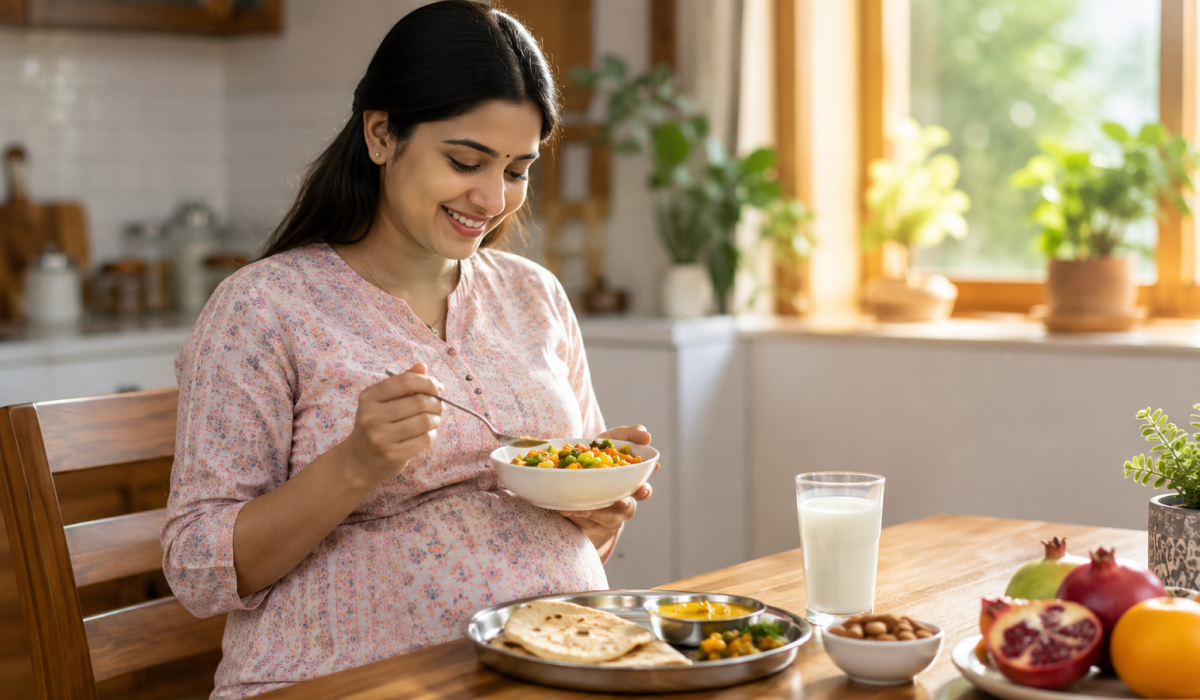
A well-planned Indian diet, built around dal, sabzi, roti, rice, milk, and seasonal fruits, can meet almost all your nutritional needs without depending heavily on expensive imported “superfoods.”
Essential Nutrients Every Pregnant Woman Needs
Folic Acid Rich Foods
Folic acid reduces the risk of neural tube defects and is most critical in the first trimester. Good Indian sources include spinach, methi (fenugreek leaves), moong dal, rajma, oranges, and fortified cereals.
Iron Rich Foods for Pregnancy
Your blood volume increases significantly during pregnancy, making iron essential to prevent anemia. Include jaggery, spinach, beetroot, pomegranate, dates, and lean meat or eggs if you are non-vegetarian.
Calcium and Vitamin D Sources
Milk, curd, paneer, ragi, and sesame seeds (til) support your baby’s bone development. Ten to fifteen minutes of morning sunlight helps your body absorb calcium better through natural vitamin D.
Protein for Baby’s Growth
Dal, chana, rajma, soya chunks, paneer, eggs, and fish provide the protein needed for your baby’s tissue and organ development.
Omega 3 and Healthy Fats
Walnuts, flaxseeds (alsi), and fish like rohu or salmon support your baby’s brain and eye development.
First Trimester Diet Plan: Indian Foods for Early Pregnancy (Week 1 to 12)
The first trimester is when morning sickness is common, so smaller, frequent meals work better than three heavy ones. Focus on folic acid, iron, and easily digestible foods.
Vegetarian option: Moong dal chilla with mint chutney, vegetable poha, dal khichdi, curd rice, and fruits like banana or pomegranate.
Non-vegetarian option: Boiled eggs, simple chicken or fish curry with rice, along with the same fruits and dal-based meals.
Ginger tea, lemon water, and dry fruits like almonds and raisins can help manage nausea and provide quick energy.
Second Trimester Diet Plan: Indian Foods for Growth and Energy (Week 13 to 27)
Appetite usually improves in this phase, and calorie needs go up slightly. This is the stage to focus on calcium, protein, and iron together.
Vegetarian option: Paneer sabzi, rajma or chole with rice, ragi roti, a glass of milk with a pinch of turmeric, and seasonal fruits.
Non-vegetarian option: Fish curry, egg bhurji, chicken with vegetables, paired with the same dal, roti, and milk options.
This is also a good time to introduce more variety, dry fruits, nuts, and one to two servings of fruit daily to keep energy steady.
Third Trimester Diet Plan: Indian Foods for Labor Preparation (Week 28 to 40)
As the baby grows rapidly, calorie and nutrient needs peak. Smaller, frequent meals help manage the reduced stomach space and common heartburn.
Vegetarian option: Vegetable khichdi, dahi, soaked almonds and walnuts, ragi porridge, and light soups.
Non-vegetarian option: Light chicken or fish preparations, boiled eggs, along with the same khichdi, dahi, and soup options.
Staying hydrated and eating fiber rich foods like fruits and whole grains also helps manage constipation, which is common in the final weeks.
Sample Full Day Indian Pregnancy Diet Chart
| Meal | Vegetarian | Non-Vegetarian |
| Early Morning | Soaked almonds and walnuts | Same |
| Breakfast | Moong dal chilla or vegetable poha | Boiled eggs with whole wheat toast |
| Mid-Morning | Seasonal fruit (banana, orange, or apple) | Same |
| Lunch | Dal, sabzi, roti, rice, and curd | Chicken or fish curry with rice and dal |
| Evening Snack | Roasted chana or sprouts | Same |
| Dinner | Vegetable khichdi or paneer sabzi with roti | Light chicken or fish preparation with roti |
| Bedtime | Warm milk with a pinch of turmeric | Same |
Healthy Weight Gain Guidelines by Trimester
Weight gain during pregnancy should be gradual, not rapid. As a general guide for women with a normal pre-pregnancy BMI:
- First trimester: 1 to 2 kg total
- Second trimester: around 0.5 kg per week
- Third trimester: around 0.5 kg per week, slightly tapering near the due date
Total healthy weight gain across pregnancy typically ranges between 11 and 16 kg, though this varies based on your pre-pregnancy weight and should always be discussed with your gynaecologist rather than followed as a strict rule.
Common Indian Pregnancy Diet Myths, Busted
Many traditional beliefs around pregnancy diet in India are not backed by medical evidence and can sometimes lead to unnecessary restriction or worry.
Myth: Papaya must be completely avoided. Ripe papaya in moderate amounts is generally safe. It is raw or unripe papaya, which contains higher levels of latex that can trigger contractions, that should be avoided.
Myth: Ghee should be eaten in very large quantities for easy delivery. Ghee in moderate amounts is a healthy fat, but excessive intake only adds unnecessary calories and does not guarantee an easier delivery.
Myth: Cold foods like curd or bananas cause cold and cough in the baby. There is no medical evidence linking curd or banana consumption to respiratory issues in the newborn. Both are nutritious and safe in normal amounts.
Myth: Eating for two means doubling your food intake. Calorie needs increase only modestly, especially in the second and third trimesters. Quality of nutrients matters far more than quantity.
If you are ever unsure about a specific food or family belief, it is always best to check with your gynaecologist rather than relying on assumptions.
Foods to Avoid During Pregnancy
Certain foods carry a higher risk of infection or complications and are best avoided or limited during pregnancy.
- Raw or undercooked meat, fish, and eggs
- Unpasteurized milk and cheese
- Raw papaya and pineapple in large quantities
- High mercury fish such as king fish in excess
- Excess caffeine, ideally kept under 200 mg per day
- Alcohol, which should be avoided completely
- Unwashed fruits and vegetables
Hydration and Lifestyle Tips for Healthy Pregnancy Care
Drinking 8 to 10 glasses of water daily supports amniotic fluid levels, digestion, and helps reduce swelling. Coconut water and fresh fruit juices without added sugar are good additions. Alongside diet, light walking, prenatal yoga, and adequate sleep all support a smoother pregnancy and are an important part of overall pregnancy care, not diet alone.
When to Consult a Gynaecologist for Pregnancy Care
While this guide covers general nutrition, every pregnancy is different. You should consult your gynaecologist if you experience persistent nausea affecting food intake, unusual weight changes, signs of gestational diabetes such as excessive thirst or frequent urination, or if you have specific dietary restrictions due to conditions like PCOS, thyroid disorders, or anemia. A personalized diet plan created with your doctor or a registered dietician ensures your pregnancy care is tailored to your exact needs rather than a generic chart.
Frequently Asked Questions
Q1: Can I follow a vegetarian diet and still meet all pregnancy nutrient needs?
Yes, a well-planned vegetarian Indian diet with dal, paneer, milk, nuts, and leafy greens can meet almost all nutrient requirements. Your gynaecologist may still recommend iron, folic acid, or vitamin B12 supplements since some nutrients are harder to get in adequate amounts from plant sources alone.
Q2: How many extra calories do I really need during pregnancy?
Most women need no extra calories in the first trimester, around 300 extra calories daily in the second trimester, and around 450 extra calories daily in the third trimester. This varies based on your activity level and pre-pregnancy weight.
Q3: Is it safe to eat spicy Indian food during pregnancy?
Yes, spicy food is generally safe and is not linked to any harm to the baby. However, if you experience acidity or heartburn, especially in the third trimester, reducing spice levels can help with comfort.
Q4: Can I continue drinking tea or coffee during pregnancy?
Moderate caffeine intake, kept under 200 mg per day, is considered safe. This is roughly one to two cups of tea or coffee daily.
Q5: Do I need to take supplements even if my diet is healthy?
Most gynaecologists recommend folic acid, iron, and calcium supplements during pregnancy regardless of diet quality, since pregnancy needs are often higher than what diet alone can consistently provide. Always take supplements only as prescribed by your doctor.
Your Pregnancy Care Journey Starts Today
A thoughtful, trimester-wise Indian diet is one of the simplest and most powerful tools for a healthy pregnancy. Combined with regular checkups and guidance from your gynaecologist, good nutrition supports both your wellbeing and your baby’s development at every stage.
If you have questions about your pregnancy diet or need a personalized plan as part of your maternity care, schedule a consultation with Dr. Harpreet Kaur, who is here to guide you through every trimester with expert, compassionate support.
Disclaimer: This blog is intended for general informational and educational purposes only and should not be considered a substitute for professional medical advice, diagnosis, or treatment. Nutritional needs vary from person to person based on health conditions, pre-pregnancy weight, and individual pregnancy factors. Always consult a qualified gynaecologist or registered dietician before making significant changes to your diet during pregnancy.