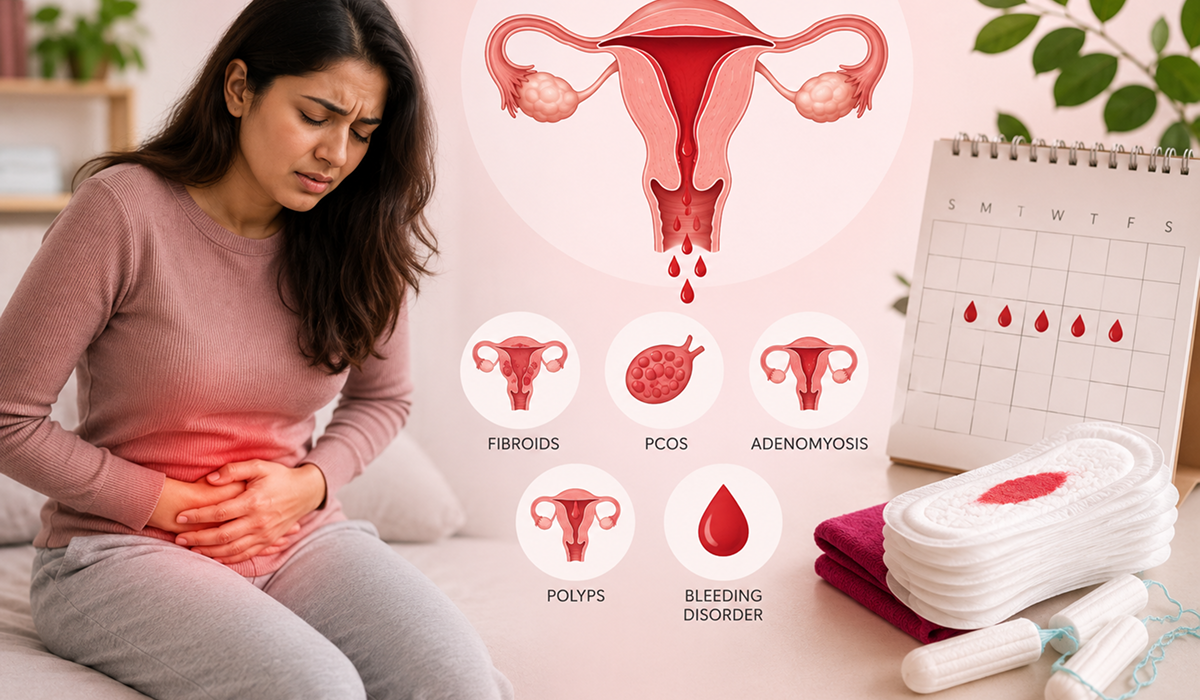
Heavy Periods: Causes, Symptoms and When to Worry
Heavy Periods at Different Life Stages
What counts as a cause worth investigating can shift depending on where you are in life:
- Teenagers. In the first couple of years after periods start, irregular and occasionally heavy cycles are common. This is simply because ovulation hasn’t fully regularised yet. That said, very heavy bleeding from the very first period can sometimes point to an underlying bleeding disorder. It’s worth an early check, rather than assuming it will settle on its own.
- After childbirth or while breastfeeding. Periods often return heavier and less predictable for the first several cycles postpartum. This usually settles within a few months. But persistent heavy bleeding beyond that point is worth a check. It helps rule out retained tissue or a hormonal cause.
- Approaching menopause (perimenopause). Fluctuating hormones in the years before menopause frequently cause heavier, less predictable periods. It’s one of the most common times for heavy bleeding to appear for the first time. It’s also the stage where ruling out fibroids, polyps, or endometrial changes matters most.
Can stress cause heavy periods?
Stress alone rarely causes heavy bleeding directly. But it can disrupt ovulation and cycle regularity. That sometimes leads to heavier or more unpredictable periods, as a downstream effect. It’s rarely the whole story, though. It’s still worth ruling out the more common physical causes first, rather than assuming stress explains everything.
Simple Steps That May Help While You Wait for Your Appointment
These won’t fix an underlying cause like fibroids or a hormonal imbalance. But they can make the wait more manageable, and give your doctor useful information:
- Increase iron-rich foods. Leafy greens, lentils, eggs, and lean meat can help offset the iron loss from heavy bleeding. This especially helps if you’re already feeling fatigued.
- Consider an over-the-counter NSAID during your period. Anti-inflammatory medication like ibuprofen, taken as directed, can modestly reduce menstrual flow and cramping for many women. Check with a pharmacist or doctor first if you’re on other medications.
- Keep a simple period diary. Note pad or tampon changes, clot size, and any dizziness or fatigue. This single habit often speeds up diagnosis more than any single test.
- Be cautious with blood-thinning supplements. High-dose fish oil, vitamin E, and certain herbal supplements can increase bleeding in some women. Mention anything you’re taking regularly at your appointment.
- Stay hydrated and pace your activity. Heavy blood loss can make you more prone to fatigue and lightheadedness. It’s reasonable to go easier on intense exercise on your heaviest days, until you’ve been evaluated.
Every woman’s period is a little different. That makes it genuinely hard to know where “normal” ends and “something’s not right” begins. Maybe you’ve always bled heavily and just assumed that’s your normal. Maybe it’s gotten noticeably worse over the last year. Or maybe you’re quietly counting how many pads you’ve gone through today, doing the math on whether that’s actually okay.
Heavy periods are common. But “common” doesn’t always mean “fine to ignore” — there’s a real, medical definition of heavy menstrual bleeding. There’s also a clear list of the usual causes. And there are specific warning signs that mean you shouldn’t wait for your next scheduled check-up. This guide from Remedy Health Clinic in Mohali walks through all three. That way, you can figure out where you actually stand. And you’ll know what to do next if it’s worth a proper look.
What Actually Counts as a “Heavy” Period?
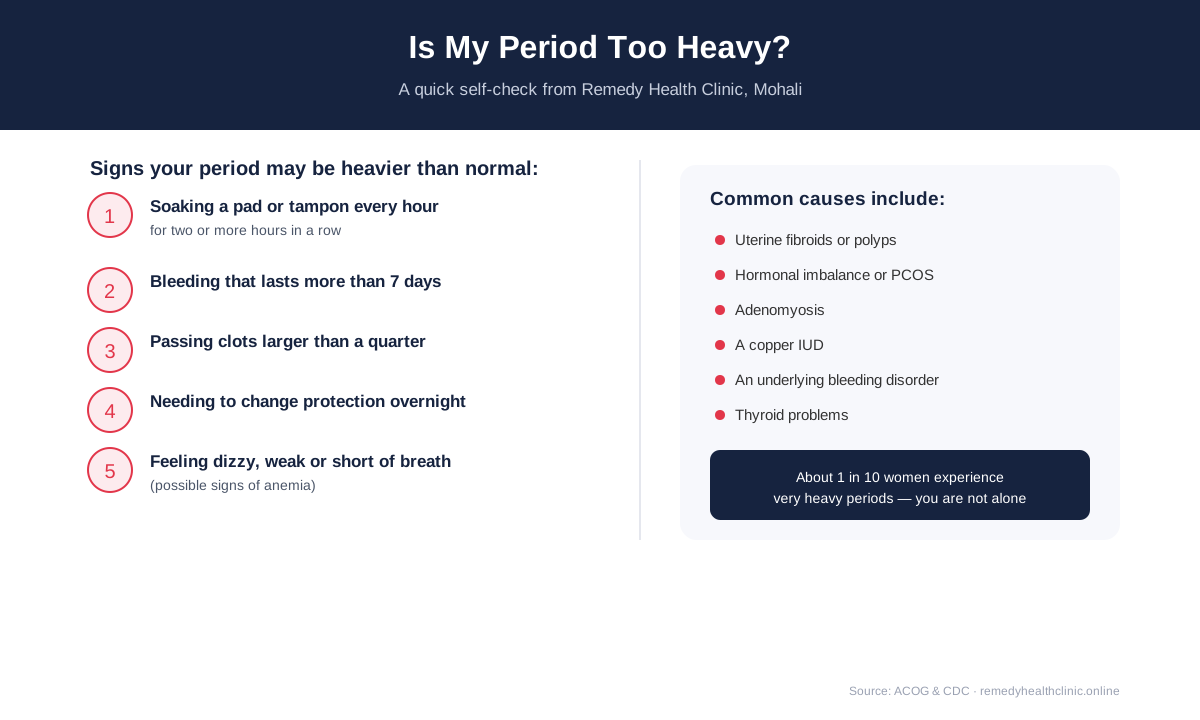
Heavy menstrual bleeding is medically called menorrhagia. The American College of Obstetricians and Gynecologists (ACOG) generally defines it as bleeding lasting more than 7 days. It can also mean soaking through one or more pads or tampons every hour, for several hours in a row. Clinically, this usually works out to losing more than 80ml of blood per cycle. Almost nobody is measuring that directly, though, which is exactly why the practical signs below matter more day to day.
If this sounds like your experience, you’re far from alone. Roughly 1 in 10 women deal with genuinely heavy periods at some point. It’s one of the most common reasons women see a gynaecologist in the first place.
What Causes Heavy Periods?
Heavy bleeding is a symptom, not a diagnosis on its own. There’s almost always an underlying reason, and identifying it is most of the work in treating it. The most common causes include:
- Uterine fibroids. Benign muscular growths in the uterine wall are one of the single most common causes of heavy bleeding. This is particularly true in women in their 30s and 40s. Many are manageable with medication; larger ones sometimes respond best to minimally invasive laparoscopic surgery.
- Hormonal imbalance, including PCOS. When ovulation is irregular or absent, the uterine lining can build up unevenly. It then sheds as an unusually heavy, unpredictable period. This is one of the hallmark symptoms of PCOS and PCOD, and it’s very treatable once identified. Diet is often part of that treatment. Our guide to foods to avoid with PCOS is a good place to start.
- Adenomyosis. This happens when tissue similar to the uterine lining grows into the uterine muscle itself. It often causes both heavy bleeding and significant cramping.
- Uterine polyps. Small, usually benign growths on the uterine lining that can cause heavy or prolonged bleeding, particularly between periods.
- An underlying bleeding disorder. Conditions that affect normal blood clotting can show up first as unusually heavy periods. These conditions are more common than most women realise.
- A copper IUD. Heavier periods are a known and fairly common side effect, especially in the first few months after insertion.
- Thyroid disorders and certain medications. An underactive thyroid, and medications like blood thinners, can both increase menstrual flow.
In a small number of cases, heavy or irregular bleeding can be an early sign of endometrial changes. These need prompt attention. This is exactly why unexplained heavy bleeding — especially if it’s new or worsening — deserves a proper evaluation, rather than guesswork. This is also why doctors generally ask about the pattern of your bleeding as much as the volume. Has it been consistent for years, changed gradually, or shifted suddenly? That pattern often narrows down the likely cause well before any test is run.
The Anemia Connection
Heavy periods don’t just affect the days you’re bleeding. Over months, they can quietly drain your iron stores and lead to iron-deficiency anemia. If you’ve noticed persistent fatigue or pale skin alongside heavy periods, mention it to your doctor. The same goes for shortness of breath on mild exertion. The same goes for cold hands and feet, or difficulty concentrating. A simple blood test can confirm it, and it’s very treatable once caught. Iron-deficiency anemia is one of the most under-diagnosed side effects of heavy periods. That’s precisely because the symptoms build up so gradually. Many women adapt to feeling tired and simply accept it as normal. They don’t realise it’s a treatable consequence of blood loss, rather than just a busy lifestyle.
Signs You Should See a Doctor Right Away
Most heavy periods aren’t an emergency, but a few specific signs mean you shouldn’t wait for a routine appointment:
- Soaking through a pad or tampon every hour for two or more hours in a row.
- Passing blood clots larger than a quarter, according to Mayo Clinic, which can indicate an abnormal bleeding pattern worth investigating.
- Feeling dizzy, faint, or severely fatigued during your period.
- Bleeding that has suddenly become much heavier or lasted much longer than it used to.
- Bleeding between periods, or any bleeding after menopause.
- Periods that are consistently disrupting work, sleep, or daily life.
The CDC notes that heavy bleeding combined with easy bruising or frequent nosebleeds can also point to a bleeding disorder. This is worth flagging to your doctor specifically, rather than assuming it’s unrelated.
Heavy Periods and Fertility — Is There a Link?
Often, yes. Many of the same conditions that cause heavy bleeding — PCOS, fibroids, hormonal imbalances — can also affect ovulation. This can make conceiving take longer than expected. Dealing with heavy or irregular periods while trying to conceive? Read our guide on when to see a fertility specialist. The two conversations often overlap, and can sometimes be addressed in the same evaluation.
What Happens at a Menstrual Disorders Consultation
A first visit for heavy periods usually starts with a detailed history. That covers how heavy, how long, how regular, and any related symptoms. This is followed by a pelvic exam and an ultrasound, to check for fibroids, polyps, or adenomyosis. Blood tests are typically used to check for anemia, thyroid function, and, when relevant, clotting function. Depending on what’s found, a hysteroscopy may be recommended to look inside the uterus directly.
Treatment is then tailored to the actual cause, not just the symptom. Many women respond well to hormonal treatment or medication alone. Others, particularly those with larger fibroids or polyps, benefit from a minor procedure. At Remedy Health Clinic’s menstrual disorders service, Dr. Harpreet Kaur starts with the least invasive option that works. Surgery is only recommended when it’s genuinely the better path.
Tracking Your Symptoms Before Your Appointment
A little preparation makes your first visit far more useful. In the weeks before your appointment, it helps to track a few things. Note how many pads or tampons you use per day at your heaviest, and how many days your period lasts. Also track whether you’re passing large clots, and any other symptoms like cramping, fatigue, or dizziness. A simple note on your phone is enough. It gives your doctor real data instead of a rough guess, and often shortens the path to a diagnosis.
Frequently Asked Questions
Are heavy periods always a sign of something serious?
No. Many cases are caused by manageable hormonal fluctuations, particularly around the start of periods, after childbirth, or approaching menopause. That said, persistent or worsening heavy bleeding is worth evaluating, rather than assuming it will resolve on its own. The treatable causes are simply too common to ignore.
Can heavy periods be treated without surgery?
Very often, yes. Hormonal medication and tranexamic acid can significantly reduce flow, without any procedure at all. In some cases, so can a hormonal IUD. Surgery is generally considered only when these approaches don’t work. It’s also an option when a specific structural cause, like a large fibroid, needs to be addressed directly.
I’ve always had heavy periods — does that mean it’s just normal for me?
Not necessarily. Some women do have a naturally heavier baseline. But “I’ve always been like this” is also a common reason. Conditions like fibroids or bleeding disorders often go undiagnosed for years. If it’s never been formally evaluated, it’s worth a one-time check, even if it feels routine to you.
Should I go to the ER for heavy bleeding?
Seek urgent medical care, rather than waiting for a scheduled appointment. This applies if you’re soaking a pad every hour for over two hours straight. The same goes for feeling faint or dizzy, or passing very large clots repeatedly. Outside of those specific signs, a routine gynaecology visit is the right starting point.
Will I need a hysterectomy?
For most women, no. A hysterectomy is generally considered a last resort, after other treatments have been tried. It’s also used in specific situations where it’s clearly the most appropriate option. The large majority of heavy bleeding cases are managed successfully with medication or minor procedures that preserve the uterus.
Getting Answers at Remedy Health Clinic, Mohali
Dr. Harpreet Kaur has spent over 15 years helping women in Mohali and Chandigarh get to the bottom of heavy periods. The goal is always a real answer, not just managing the symptom indefinitely. If you’ve been quietly wondering whether your periods are “too heavy,” that question is usually reason enough to get checked. It’s a quick, low-pressure visit. It either puts your mind at ease, or gets you started on a treatment that works. Both clinic locations offer on-site ultrasound and bloodwork. Much of the initial workup can typically be completed without multiple separate trips, or long waits between appointments.
Ready to get answers?
Book a consultation with Dr. Harpreet Kaur at Remedy Health Clinic’s Sector 91 or TDI Sector 110 clinics in Mohali.
Contact us today +91 88474 16452to schedule your visit.

About the Author
Dr. Harpreet Kaur, MBBS, DGO, DNB
Dr. Harpreet Kaur is a gynaecologist and obstetrician with over 15 years of experience treating women across Mohali and Chandigarh, specialising in pregnancy care, infertility treatment, PCOS management, and minimally invasive gynaecological surgery at Remedy Health Clinic. Read her full profile.