
When Should You See a Fertility Specialist in Mohali?
There’s a particular kind of quiet math that starts happening in your head. It begins once you decide you’re ready for a baby. You count days, then weeks, then months. You start noticing pregnancy announcements everywhere. And somewhere around month four or five of trying, a question creeps in. It’s one many women sit with for too long. Is this normal, or is something wrong?
If you’re asking that question right now, this article is for you. There’s a clear, medically-defined answer for “time to get checked.” Mostly, it’s age plus a few red flags. At Remedy Health Clinic in Mohali, Dr. Harpreet Kaur sees this exact scenario often. Couples wait a year or two longer than they needed to, simply because no one told them the actual timeline. Some also assume a fertility consultation automatically means something drastic, like IVF. Neither is true, and the earlier you get a clear answer, the more options tend to stay on the table. Let’s walk through exactly when to make that appointment. We’ll also cover what causes the delay, and what actually happens once you’re in the room.
What Actually Counts as “Infertility”?
Infertility sounds like a heavy, final word, but medically it just describes a timeline. For women under 35, the ASRM sets the mark at 12 months of unprotected intercourse without pregnancy. For women 35 and older, that window is 6 months. For women over 40, most specialists recommend evaluation right away, without waiting out either window. Egg quantity and quality decline more quickly in this decade, and every month can matter.
None of this means anything is permanently wrong. It’s simply the point where a doctor starts looking for a reason, instead of telling you to wait. Many couples who meet this definition go on to conceive naturally soon after. Sometimes all it takes is a small adjustment, once an underlying issue is identified.
You Are Not Alone in This
It can feel isolating, especially when it seems like everyone around you is conceiving without effort. The numbers tell a different story. The World Health Organization estimates that roughly 1 in 6 people worldwide experience infertility at some point in their reproductive life. That figure holds remarkably steady across high-, middle-, and low-income countries alike. It is not rare or unusual, and it is rarely anyone’s “fault.” It’s common, under-discussed, and treatable once evaluated.
The Right Time to See a Fertility Specialist, by Age
Here’s the timeline in practical terms, based on ASRM guidance:
- Under 35: See a specialist after 12 months of trying without success.
- 35 to 39: See a specialist after 6 months of trying without success.
- 40 and older: See a specialist right away, ideally before you even start trying. This way, any issues can be caught and addressed as early as possible.
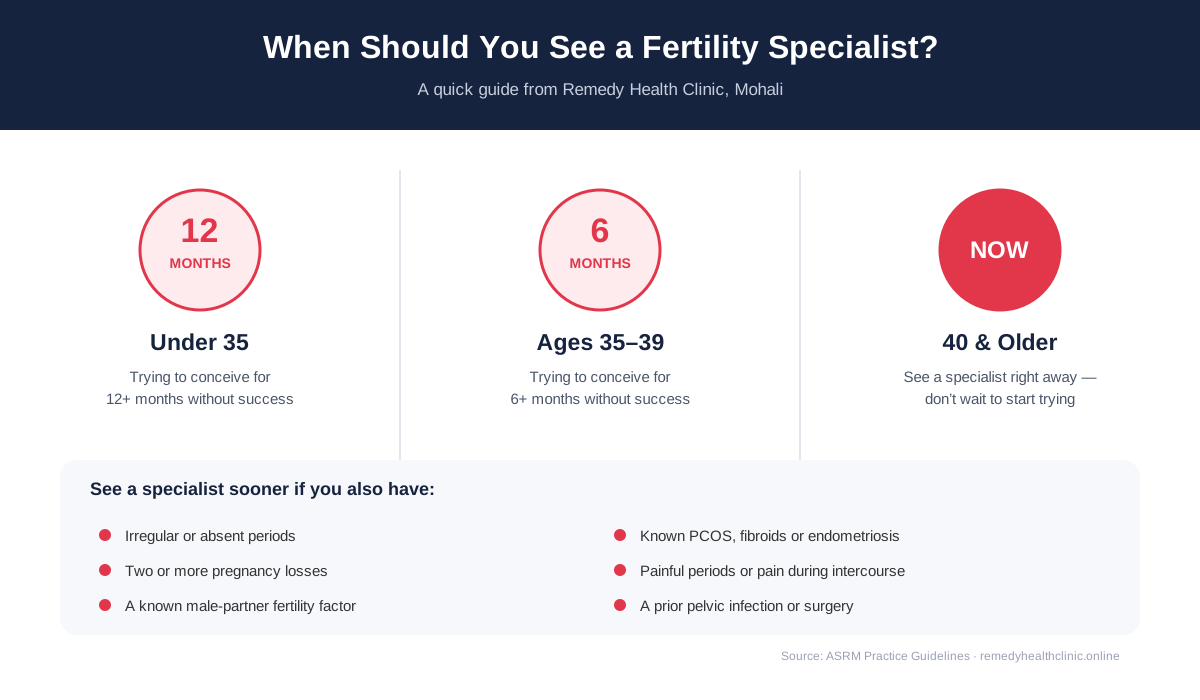
These timelines assume otherwise normal cycles and no known reproductive health issues. If any of the following apply to you, the advice changes. You should book a consultation sooner, regardless of how long you’ve been trying.
Other Signs You Shouldn’t Wait
- Irregular, absent, or very unpredictable periods. Ovulation problems are one of the most common and most treatable causes of infertility. Irregular cycles are usually the first clue. If cycles are irregular, or periods run heavy, see our guide: heavy periods, causes, symptoms and when to worry. It’s worth having them evaluated as part of our menstrual disorders care, instead of waiting on a fertility workup.
- A known diagnosis of PCOS. Polycystic ovary syndrome is one of the leading causes of ovulatory infertility. It’s also one of the most manageable, once properly treated. If you already know you have PCOS or PCOD, don’t wait out the standard 6-12 month window. Get a plan in place early. Diet plays a real role here too; see our guide on foods to avoid with PCOS for practical, Indian-kitchen swaps.
- Fibroids, endometriosis, or a history of pelvic surgery. These can physically affect the uterus or fallopian tubes. Many cases are manageable through minimally invasive laparoscopic gynaecological surgery, often improving fertility outcomes afterward.
- Two or more pregnancy losses. Recurrent miscarriage deserves its own evaluation, separate from a standard infertility workup. It shouldn’t wait for the 6- or 12-month mark.
- Painful periods or pain during intercourse. This can point to conditions like endometriosis that directly affect fertility and are far more manageable when caught early.
- A known male-partner factor. Infertility isn’t only a “women’s issue.” A low sperm count or prior varicocele in your partner means both get evaluated.
What Actually Causes Infertility?
One of the most common misconceptions is that infertility is usually “a female problem.” It isn’t. According to Mayo Clinic and multiple large reviews on the topic, the breakdown looks roughly like this:
- About one-third of cases involve a female factor. Most often, this means ovulation disorders like PCOS, tubal blockages, endometriosis, or age-related decline in egg quality.
- About one-third of cases involve a male factor — typically related to sperm count, motility, or shape.
- The remainder involves a combination of both partners, or is unexplained even after a full evaluation. This still leaves several effective treatment paths on the table.
This is why a fertility evaluation looks at both partners from day one, not just one. It removes a lot of unnecessary guilt and gets to an answer faster.
What Happens at Your First Fertility Consultation
A first visit is rarely as intimidating as people expect. It usually starts with a detailed conversation covering your cycle history, past pregnancies or losses, existing conditions, medications, and lifestyle. This is followed by a pelvic examination and an ultrasound, to check the uterus and ovaries. Basic hormone bloodwork is typically ordered to check ovulation and thyroid function. If you have a partner, a semen analysis is usually requested in parallel. Both sides get evaluated together, rather than in sequence.
From there, the next steps depend entirely on what’s found. Some couples need nothing more than cycle tracking and a few lifestyle adjustments. Others benefit from ovulation induction, minor surgical correction, or more advanced infertility treatment depending on the underlying cause. The point of the first visit isn’t to commit you to any particular treatment. It’s simply to get a clear, evidence-based picture of what’s happening, so later decisions are informed rather than guessed at.
It’s also worth saying plainly: age matters, but it isn’t destiny. Even for women in their late 30s and early 40s, an early, thorough evaluation meaningfully improves outcomes. And if a pregnancy is later classed as high-risk due to maternal age, an existing doctor relationship helps.
Why Patients in Mohali Choose Dr. Harpreet Kaur for Fertility Care
Dr. Harpreet Kaur has spent over 15 years treating women across Mohali and Chandigarh. She has specialised training in infertility and reproductive medicine, alongside her broader obstetric and gynaecological practice. What patients consistently mention isn’t just her clinical background. She takes the time to explain what’s actually happening in your body, and walks through every option before recommending one. She also treats the emotional weight of this process as seriously as the medical side of it. Fertility evaluations at Remedy Health Clinic are done thoroughly and unhurried, whether it’s your first appointment or your fifth. Both clinic locations — Sector 91 and TDI Sector 110 — offer on-site ultrasound and lab testing. Much of your workup can often be completed in one visit, instead of spread across weeks.
If you’ve been quietly doing the monthly math for longer than you’d like to admit, that’s usually a good sign. It’s time to stop waiting and start asking. Whether you’re at the 6- or 12-month mark, or already know something isn’t right, an evaluation now costs very little. It can save months, sometimes years, of uncertainty.
Simple Steps That Support Fertility While You Wait for Your Appointment
You don’t have to put your life on hold until your first consultation. A few well-supported habits can meaningfully improve your odds in the meantime. They’re worth starting regardless of when you’re seen:
- Track your cycle. A simple period-tracking app or basal body temperature chart can reveal whether you’re ovulating at all. It also helps your doctor interpret your history faster at your first visit.
- Maintain a healthy, stable weight. Both very low and very high body weight can disrupt ovulation. Even a modest weight change, done gradually, can restore regular cycles for some women — particularly those with PCOS.
- Start a prenatal vitamin with folic acid. Do this as soon as you start trying, not after a positive test. Neural tube development begins very early in pregnancy.
- Cut back on smoking and alcohol. Both are consistently linked to reduced fertility in men and women alike. Quitting improves outcomes, even for couples pursuing fertility treatment.
- Manage stress where you can. Stress alone rarely causes infertility. But chronic stress can affect cycle regularity, sleep, and how consistently couples time intercourse — all indirectly relevant factors.
None of these replace a proper medical evaluation. But they’re a reasonable, evidence-informed way to spend the weeks before your appointment, rather than simply waiting anxiously.
Frequently Asked Questions
Does seeing a fertility specialist mean I’ll need IVF?
No. IVF is one of many possible treatments, usually reserved for specific diagnoses or after simpler approaches haven’t worked. Many patients are helped with far less — ovulation tracking, medication to regulate cycles, minor surgical correction, or timed intercourse guidance. Your first visit is diagnostic, not a commitment to any particular treatment path.
Should my partner come to the first appointment?
Ideally, yes. Male factors account for roughly a third of infertility cases. Evaluating both partners together from the start avoids months of delay. That delay often comes from testing one partner, ruling them out, and only then testing the other.
I have PCOS and irregular periods — should I still wait out the 6 or 12 month window?
No. If you already know you have an ovulation disorder like PCOS, there’s little value in waiting. Irregular or absent ovulation is unlikely to resolve on its own. It’s reasonable to book an evaluation as soon as you start trying to conceive.
Is infertility usually permanent?
Not in most cases. Many causes of infertility are treatable — including ovulation disorders, mild male-factor issues, and structural problems like fibroids. A large proportion of couples who complete an evaluation go on to conceive, either naturally or with targeted treatment. Infertility describes a delay and a diagnosis to investigate, not a permanent outcome.
How much does a fertility evaluation cost, and is it covered by insurance in India?
Initial consultations, bloodwork, and ultrasounds are generally affordable and are sometimes partially covered depending on your insurer and specific plan. Advanced treatments vary more widely in cost. It’s worth discussing your specific situation and budget openly at your first visit. Your doctor can then help you prioritise the most cost-effective path forward.
Does age really matter that much if I’m otherwise healthy?
Yes, more than most people expect. Egg quantity and quality decline gradually through your 20s and 30s, then more sharply after 35 — regardless of fitness. It’s a biological timeline, not a fitness one. This is exactly why the recommended waiting period before seeing a specialist shortens as you get older. The same six months of “waiting and seeing” carries a different cost at 37 than it does at 27. It’s not meant to alarm you. It just explains why your doctor may suggest moving faster than a friend’s story led you to expect.
Ready to get answers?
Book a fertility consultation with Dr. Harpreet Kaur at Remedy Health Clinic’s Sector 91 or TDI Sector 110 clinics in Mohali.
Contact us today +91 88474 16452to schedule your visit.

About the Author
Dr. Harpreet Kaur, MBBS, DGO, DNB
Dr. Harpreet Kaur is a gynaecologist and obstetrician with over 15 years of experience treating women across Mohali and Chandigarh, specialising in pregnancy care, infertility treatment, PCOS management, and minimally invasive gynaecological surgery at Remedy Health Clinic. Read her full profile.