Foods to Avoid With PCOS: A Complete Indian Diet Guide
Chances are, if diagnosed with PCOS, someone already told you to “fix your diet.” No one explains what that means. Not in practical, Indian-kitchen terms, anyway. Should you give up rice completely? Is your evening chai secretly working against you? Can you still enjoy your mother’s rajma-chawal on a Sunday?
This guide answers those questions properly. We’ll cover exactly which foods make PCOS symptoms worse, and why they do it at a hormonal level. Just as importantly, we’ll cover what to eat instead. We’ll stick to foods that are actually available in an Indian kitchen, rather than a generic Western grocery list. PCOS is remarkably common in India. A nationwide systematic review found a prevalence of roughly 19.6% under the Rotterdam criteria, with rates notably higher in urban women. If you’re dealing with this, you are very much not alone. Diet is one of the few levers you have real, daily control over.
Quick Answer: Foods to Avoid With PCOS
If you only remember one list, make it this one. The foods below are consistently linked to worsening insulin resistance and androgen (male hormone) levels. These are the two mechanisms that drive most PCOS symptoms:
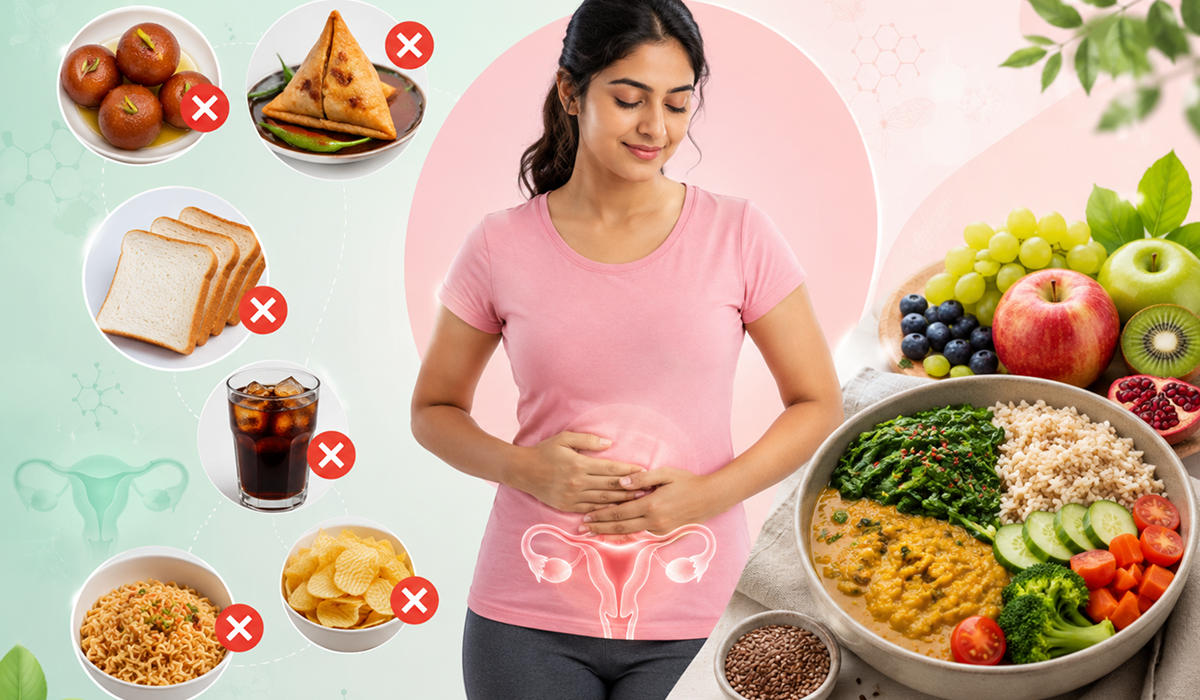
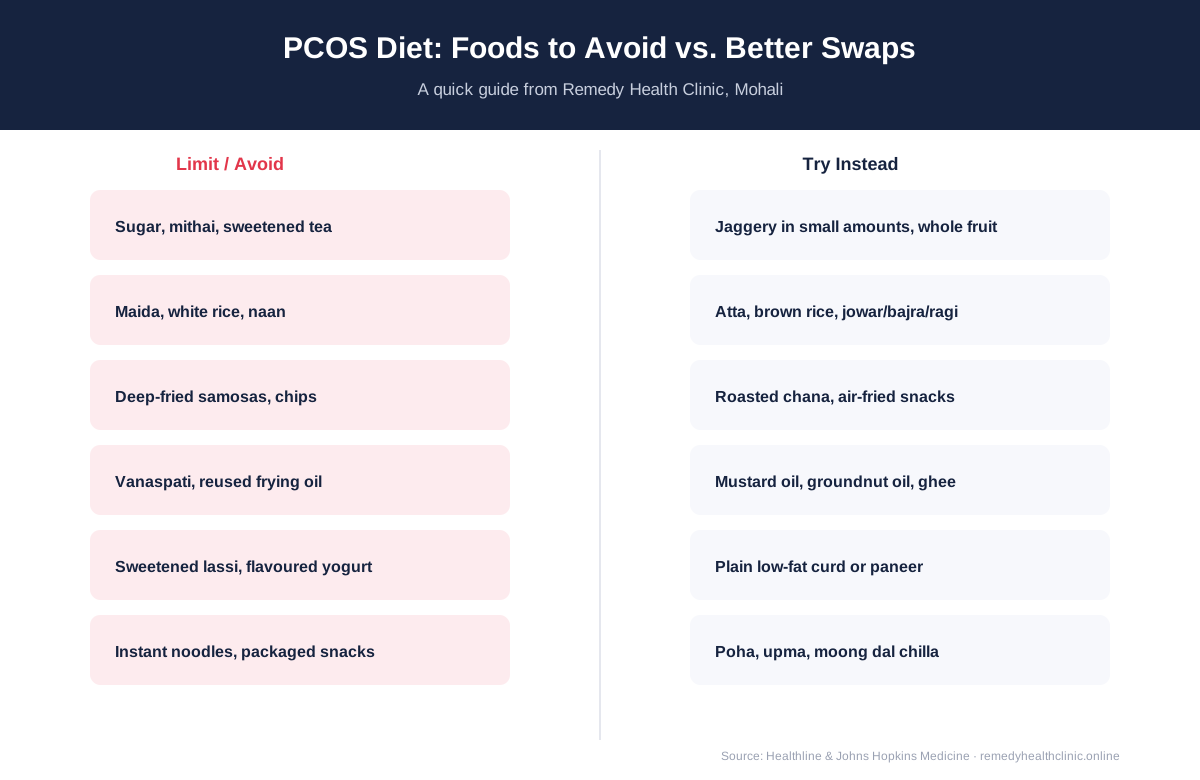
- Sugar and sweets — mithai, sugary tea/coffee, soft drinks, packaged juices
- Refined grains — maida, white bread, white rice in large portions, naan, biscuits
- Fried and deep-fried foods — samosas, pakoras, chips, fried snacks
- Refined and reheated cooking oils — vanaspati, repeatedly reused frying oil
- Full-fat, sweetened dairy — flavoured yogurt, sweetened lassi, excess paneer for the sensitive
- Processed and packaged foods — instant noodles, packaged snacks, ready-to-eat meals
- Red and processed meat — mutton, sausages, processed cold cuts, in large or frequent portions
- Alcohol — affects liver hormone clearance and adds empty sugar calories
The sections below explain the “why” behind each of these. They also cover what to eat instead. That way, this doesn’t just feel like a list of things you’re no longer allowed to enjoy.
Why Diet Affects PCOS in the First Place
PCOS symptoms include irregular periods, acne, unwanted facial or body hair, weight gain that resists effort, and trouble conceiving. These are largely driven by two connected problems: insulin resistance and excess androgens. When your cells stop responding well to insulin, your pancreas produces more of it to compensate. High insulin levels then push your ovaries to produce more androgens, which is what drives many of the visible symptoms. Diets high in sugar and refined carbohydrates make this cycle worse by repeatedly spiking blood glucose and, in turn, insulin. This is exactly why the foods below matter so much more for PCOS than they would for someone without it.
1. Sugar and Sugary Foods
Why it matters: Sugar is absorbed almost immediately, causing a sharp glucose spike and a corresponding insulin surge. For someone with PCOS, this directly feeds the insulin-androgen cycle described above. This includes obvious sources like mithai and desserts. But it also includes the sugar hiding in your daily chai, packaged fruit juice, and flavoured yogurt.
Try instead: Cut sugar in tea/coffee gradually rather than all at once — your taste buds do adjust. Swap packaged juice for whole fruit. And satisfy sweet cravings with a small portion of jaggery or a piece of fruit, rather than refined sugar.
2. Refined Grains (Maida, White Rice, White Bread)
Why it matters: Refined grains have had most of their fibre stripped away. This means they digest and raise blood sugar almost as quickly as sugar itself. Naan, white bread, biscuits, and large portions of white rice all fall into this category.
Try instead: This does not mean giving up rice and roti forever — it means shifting the balance. Swap maida for atta, and white rice for brown rice or millets like jowar, bajra, and ragi. Choose whole wheat or multigrain roti over naan or white bread. Pairing any grain with dal or vegetables also slows down its impact on blood sugar considerably.
3. Fried and Deep-Fried Foods
Why it matters: Deep-frying does two things at once. It adds a large amount of unhealthy fat. And the high heat used, especially with reused oil, generates compounds that increase inflammation. Chronic low-grade inflammation is now understood to play a real role in worsening PCOS symptoms.
Try instead: Try air-fried or shallow-fried versions of the same snacks. Think roasted chana instead of fried chips, or an air-fried samosa instead of deep-fried. Save deep-fried food for genuinely occasional treats, rather than a daily habit.
4. The Wrong Cooking Oils
Why it matters: This one is rarely discussed, but it matters a lot in an Indian kitchen. Vanaspati and reused frying oil are high in trans fats. These are strongly linked to insulin resistance and inflammation — arguably worse than the fried food itself.
Try instead: Cook with mustard oil, groundnut oil, or cold-pressed (kachi ghani) oils. Use them fresh, rather than reused for repeated frying. A small amount of ghee is generally fine for most women with PCOS. It is not the same concern as industrially hydrogenated vanaspati.
5. Full-Fat, Sweetened Dairy
Why it matters: Dairy’s relationship with PCOS is more individual than most of the other items on this list. Some women find that dairy, particularly full-fat and sweetened varieties, worsens acne and bloating. This is likely related to its effect on insulin-like growth factor (IGF-1). Others tolerate it perfectly well.
Try instead: Rather than eliminating dairy entirely, try plain low-fat curd or paneer in moderation. See how your skin and digestion respond over a few weeks. Avoid sweetened lassi and flavoured yogurt cups, which combine the dairy question with a straightforward sugar problem.
6. Processed and Packaged Foods
Why it matters: Instant noodles, packaged snacks, and ready-to-eat meals are typically high in refined carbohydrates, unhealthy fats, and sodium. They also offer almost no fibre to slow down digestion. They’re easy to overeat too, since they’re designed to be.
Try instead: Simple home-cooked alternatives like poha, upma, or moong dal chilla take about the same time to prepare. They offer far more fibre and far less processing.
7. Red and Processed Meat
Why it matters: Frequent red and processed meat consumption is associated with higher inflammation markers. Some studies also link it to worse insulin sensitivity, compared with lean protein sources.
Try instead: Chicken, fish, eggs, and tofu all provide good protein without the same inflammatory load. So does a combination of dal and whole grains. This doesn’t mean mutton is forbidden forever — it’s about frequency and portion, not permanent elimination.
8. Alcohol
Why it matters: Alcohol is metabolised by the liver, the same organ responsible for clearing excess hormones from your body. Regular drinking can interfere with this process, add significant empty sugar calories, and disrupt sleep. All of this works against hormonal balance.
Try instead: If you drink, keep it occasional rather than habitual. Treat it the same way as sugar: fine in moderation, not as a regular fixture.
This overall pattern is consistently associated with improved insulin sensitivity, according to Healthline and Johns Hopkins Medicine. The pattern is simple: lower refined carbohydrate and sugar intake, paired with higher fibre and lean protein. For many women, it also leads to more regular ovulation.
You Don’t Have to Eliminate Everything at Once
One thing almost every generic PCOS diet list gets wrong is the framing. It implies that all of the above needs to disappear from your plate immediately and permanently. In practice, that’s neither necessary nor realistic. It also tends to backfire. Strict elimination diets are hard to sustain, and often lead to swinging back to old habits entirely. A more realistic approach is shifting your everyday baseline. Think home-cooked meals most days, and whole grains over refined ones. Treat sugar, fried snacks, and mithai as occasional rather than daily. Consistency across weeks and months matters far more than being perfect on any single day.
What About Foods That Help?
Alongside cutting back on the categories above, certain foods actively support better insulin sensitivity and lower inflammation. These include high-fibre vegetables, dal and legumes, fenugreek (methi), flaxseeds, cinnamon, and fatty fish like sardines or salmon where possible. Building meals around these, rather than only focusing on what to remove, tends to be more sustainable. It’s a better way to approach a PCOS-friendly diet long-term.
Diet Helps, But It Isn’t the Whole Picture
Diet changes can meaningfully improve PCOS symptoms. But for many women, they work best alongside proper medical evaluation, not instead of it. PCOS can present very differently from person to person. An accurate diagnosis matters. So does a treatment plan tailored to your hormone profile, cycle pattern, and goals — symptom relief, weight management, or fertility. Together, these tend to get better results than diet changes alone. If you also have unusually heavy or irregular periods, mention this specifically at your evaluation. It can point to how your particular case of PCOS is presenting. And if you’re also trying to conceive, it’s worth reading our guide on when to see a fertility specialist. PCOS is one of the most common, and most treatable, causes of delayed conception.
At Remedy Health Clinic’s PCOS & PCOD treatment service, Dr. Harpreet Kaur pairs dietary guidance with hormonal treatment. This is tailored to your specific presentation, rather than a one-size-fits-all plan. It’s particularly worth pursuing if lifestyle changes alone haven’t improved your cycles after a few months. It’s also worth considering if you’re dealing with related menstrual disorders alongside your PCOS symptoms.
How to Start This Week, Without Overhauling Everything
If this list feels like a lot at once, you don’t need to apply all of it starting tomorrow morning. A more sustainable way in is to pick one or two changes for this week specifically. Let them become routine, then add another once they feel automatic rather than effortful.
- Week 1: Swap your cooking oil for mustard or groundnut oil. Cut back to one sweetened cup of chai or coffee a day.
- Week 2: Replace white rice with brown rice or a millet like jowar or bajra, at one meal a day. Swap one packaged snack for a home-cooked one, like roasted chana or poha.
- Week 3: Add a source of fibre — dal, vegetables, or salad — to every meal. Start noticing how sweetened versus plain dairy affects your skin.
By the time you’re a month in, most of these changes stop feeling like a “diet” at all. They simply become how you eat — which is exactly the point. PCOS management is a long-term pattern, not a short-term fix.
Frequently Asked Questions
Do I have to give up rice and roti completely if I have PCOS?
No. The goal is portion control and better choices, not elimination. Swap some white rice for brown rice or millets, and choose whole wheat roti over naan. Pairing grains with dal or vegetables helps too. None of this requires you to give up staple foods entirely.
Is chai bad for PCOS?
Plain tea itself isn’t the concern — the sugar typically added to it is. One or two cups a day with little or no added sugar is unlikely to meaningfully affect PCOS. Several sweetened cups throughout the day add up quickly, though, and are worth reducing gradually.
Is ghee allowed on a PCOS diet?
A moderate amount of ghee is generally fine and is not comparable to industrially processed vanaspati or reused frying oil. It’s the deep-frying and hydrogenated fats that are the bigger concern, not traditional ghee used in reasonable quantities.
Can I ever have chocolate or dessert again?
Yes, occasionally. A small portion of dark chocolate is fine. So is a dessert at a celebration — neither will undo weeks of otherwise good habits. The pattern that matters is what you eat most days, not a single treat here and there.
How long does it take to see results from diet changes?
Many women notice improved energy and less bloating within a few weeks. Changes to cycle regularity typically take longer to appear, often 8 to 12 weeks of consistent changes. That’s because hormone patterns take time to shift. If you haven’t seen any improvement after 2 to 3 months, that’s a good sign. Get a proper medical evaluation alongside your dietary changes.
Are supplements like myo-inositol worth taking?
Some supplements, including myo-inositol and vitamin D3, have reasonable evidence behind them for improving insulin sensitivity in PCOS. That said, they work best as an addition to dietary changes and medical guidance, not a replacement for them. It’s worth discussing dosage and suitability with your doctor, rather than self-prescribing.
Ready to Get Your PCOS Symptoms Under Control?
Diet is a great start, but a plan built around your specific hormone profile, cycle pattern, and goals gets real results faster. Dr. Harpreet Kaur can help you build one.
Book a Consultation Or call +91 88474 16452Remedy Health Clinic — Sector 91 & TDI Sector 110, Mohali

About the Author
Dr. Harpreet Kaur, MBBS, DGO, DNB
Dr. Harpreet Kaur is a gynaecologist and obstetrician with over 15 years of experience treating women across Mohali and Chandigarh, specialising in pregnancy care, infertility treatment, PCOS management, and minimally invasive gynaecological surgery at Remedy Health Clinic. Read her full profile.