
Which Size of Fibroid Is Dangerous? A Complete Size Guide
A fibroid diagnosis usually comes with one immediate question: how big is it, and should I be worried? It’s a fair thing to ask. But the honest answer is a little more layered than a single number on an ultrasound report. Size matters, but it’s not the only thing that decides whether a fibroid needs attention. Location, growth rate, and the symptoms it’s actually causing all factor in too, and it’s exactly what we look at during Fibroids Treatment in Mohali at our clinic.
Fibroid Size Chart: How Fibroids Are Measured and Classified
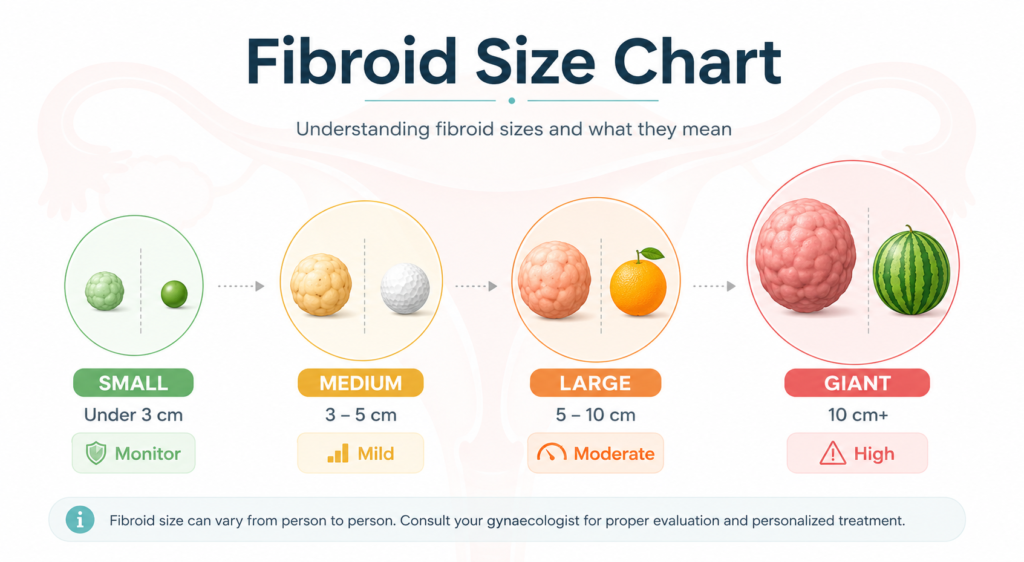
Fibroids are measured in centimeters or millimeters, usually based on their widest diameter on an ultrasound or MRI. Since those numbers can be hard to picture, doctors often compare them to familiar objects. A small fibroid might be described as pea-sized or the size of a coin.
A medium one gets compared to a golf ball. Large fibroids are often likened to an orange or grapefruit, and the largest cases, though rare, get compared to a watermelon.
Doctors generally sort fibroids into three or four rough categories:
- Small: Under 2 to 3 cm
- Medium: 3 to 5 cm
- Large: 5 to 10 cm
- Giant: Over 10 cm
These aren’t rigid medical cutoffs so much as useful reference points. A fibroid just under 5 cm and one just over it aren’t behaving in dramatically different ways. What tends to matter more is which side of that general threshold a fibroid falls on, combined with everything else going on.
Small Fibroids (Under 2 to 3 cm): Usually Harmless
Most small fibroids cause no symptoms at all. They’re often found by accident, during a routine pelvic exam or an ultrasound ordered for something unrelated. At this size, fibroids rarely distort the shape of the uterus or press on nearby organs, so the standard approach is simply to monitor them with periodic scans rather than treat them.
If you’ve been told you have a small fibroid and nothing else, there’s usually very little to actively do beyond keeping an eye on it.
Medium Fibroids (3 to 5 cm): When Symptoms Start Showing Up
This is often where things start to become noticeable. Medium fibroids can begin to cause heavier or longer periods, some pelvic discomfort, or a mild feeling of pressure or bloating.
They’re not usually dangerous at this stage, but they’re also the size range where women start booking appointments because something feels different. Treatment at this point is still often manageable without surgery, through medication that regulates bleeding or manages symptoms directly.
Large Fibroid Size (Over 5 to 6 cm): Where Complications Start Increasing
This is the size range most directly tied to the question of which size of fibroid is dangerous. Once a fibroid crosses roughly the 5 to 6 cm mark, it’s more likely to distort the shape of the uterus, press on the bladder or bowel, and cause heavier bleeding that can lead to anemia over time.
Some women notice frequent urination, constipation, or a persistent dragging sensation in the lower abdomen as the fibroid takes up more space.
Large fibroids aren’t automatically dangerous in the sense of being life-threatening. Most are still benign and slow-growing. But they’re the point where a doctor is more likely to recommend active treatment rather than just monitoring, simply because the symptoms tend to keep building rather than staying stable.
Giant Fibroid Symptoms (10 cm and Above): The Most Serious Cases
Fibroids over 10 cm, sometimes called giant fibroids, are far less common but do carry more serious risks. At this size, a fibroid can significantly enlarge the uterus, cause visible abdominal swelling, and put real pressure on surrounding organs and nerves.
Severe pelvic pain, heavy bleeding, and noticeable pressure effects on the bladder and bowel are common at this stage.
There’s also a small but real risk of degeneration, where the fibroid outgrows its blood supply and the tissue inside starts to break down, which can cause sudden, sharp pain. Rapid growth in any fibroid, regardless of current size, is also worth flagging to your doctor, since it can occasionally point to a rare cancerous change called leiomyosarcoma.
This is genuinely uncommon, but it’s part of why doctors pay closer attention to fibroids that are growing quickly rather than just sitting at a stable size.
Fibroid Location vs Size: Why Size Isn’t the Whole Story
Here’s the part that trips a lot of people up: a large fibroid isn’t automatically more dangerous than a small one. Location matters just as much, sometimes more. A small submucosal fibroid, one that grows into the uterine cavity itself, can cause significant bleeding and fertility problems despite being only a couple of centimeters across.
Meanwhile, a much larger subserosal fibroid, one that bulges outward on the uterus’s outer surface, might cause no bleeding at all and stay symptom-free for years.
According to Mayo Clinic, fibroid symptoms depend heavily on the number, size, and location of the fibroids present, not size in isolation. So when you’re trying to understand your own report, it’s worth asking your doctor not just how big the fibroid is, but exactly where it sits and whether it’s affecting the uterine cavity.
Fibroid Size and Pregnancy Complications: What to Know
Fibroid size and pregnancy is one of the more common concerns we hear at the clinic, and it’s a reasonable one. Large fibroids, particularly ones that distort the uterine cavity, have been linked to a higher risk of preterm birth, breech positioning, and other complications.
Fibroids can also grow during pregnancy due to hormonal changes and increased blood flow to the uterus, which sometimes catches women off guard if a previously small fibroid becomes noticeably larger.
That said, plenty of women with fibroids, including fairly large ones, go on to have healthy pregnancies with the right monitoring.
This is exactly the kind of situation where high-risk pregnancy care becomes relevant, since closer monitoring through pregnancy can catch complications early rather than after they’ve become urgent.
If you’re planning a pregnancy and already know you have a fibroid, it’s worth discussing with your gynaecologist before you start trying, not after.
When to See a Doctor for Fibroids: Warning Signs to Watch
Rather than fixating purely on centimeters, it helps to pay attention to what your body is actually telling you. Worth booking an appointment if you’re noticing:
- Periods that have become noticeably heavier, longer, or more painful than usual
- A persistent feeling of pressure, fullness, or bloating in the lower abdomen
- Frequent urination or a sense that your bladder never fully empties
- Constipation or a change in bowel habits without another clear cause
- Sudden, sharp pelvic pain, which can sometimes indicate degeneration
- Difficulty conceiving, or a fibroid that’s rapidly growing on repeat scans
Regular checkups matter here too. A lot of fibroids are caught early simply because someone kept up with routine gynaecological visits, long before symptoms became disruptive enough to prompt an urgent appointment on their own.
Fibroid Treatment Options by Size: From Monitoring to Myomectomy
Treatment isn’t purely dictated by size, but there’s a general pattern worth knowing:
Small fibroids are typically just monitored, with a repeat ultrasound every so often to make sure nothing’s changing.
Medium fibroids causing manageable symptoms often start with medication aimed at controlling bleeding and slowing growth.
Large fibroids are more likely to need a procedural approach, often laparoscopic myomectomy, which removes the fibroid while preserving the uterus, particularly relevant if fertility is a priority.
Giant fibroids sometimes require open surgery rather than a minimally invasive approach, simply due to their size, and in some cases, especially for women who’ve completed their families, a hysterectomy gets discussed as a more permanent option.
The National Library of Medicine notes that treatment decisions typically weigh fibroid size and symptoms alongside a woman’s age and future fertility plans, which lines up with how treatment tends to get approached in practice.
Frequently Asked Questions
What size of fibroid is considered dangerous?
There’s no single dangerous size, but fibroids over roughly 5 to 6 cm are more likely to cause significant symptoms or complications. Fibroids over 10 cm, sometimes called giant fibroids, carry the highest risk of severe pressure symptoms and complications.
Can a small fibroid still be dangerous?
Yes, depending on location. A small fibroid growing into the uterine cavity can cause heavier bleeding and fertility problems despite being just a couple of centimeters, sometimes more than a much larger fibroid sitting elsewhere in the uterus.
Does fibroid size determine if I need surgery?
Not entirely. Size is one factor among several, including location, symptom severity, and whether fertility is a concern. Some large fibroids causing no symptoms are simply monitored, while smaller ones in sensitive locations may need earlier treatment.
How fast do fibroids usually grow?
Growth rates vary a lot between individuals. Most fibroids grow slowly over months or years, but rapid growth in a short period is worth flagging to your doctor, since it’s an important thing to rule out during evaluation.
Can fibroids shrink on their own?
Fibroids can shrink after menopause as estrogen levels drop, since they’re hormonally driven growths. Before menopause, they generally don’t shrink without treatment, though growth can plateau for extended periods.
Should I be worried about a fibroid found incidentally on a scan?
Not necessarily. Many fibroids are discovered incidentally and cause no problems at all. What matters is discussing the size, location, and your specific symptoms with your gynaecologist rather than assuming any fibroid automatically needs treatment.
Get Your Fibroid Properly Evaluated
A number on an ultrasound report only tells part of the story. Dr. Harpreet Kaur, a gynaecologist and obstetrician with over 15 years of experience at Remedy Gynae & Health Clinic in Mohali, looks at the full picture before recommending anything, size, location, how fast it’s growing, and how it’s actually affecting you day to day. That’s what actually determines whether a fibroid needs watching, medication, or a procedure like laparoscopic myomectomy.
If you’ve been handed a size in centimeters and left wondering what it actually means for you, that conversation is worth having in person rather than guessing from a report.
If you’ve recently been told you have a fibroid and aren’t sure what the size actually means for you, book a consultation and get a clear answer instead of a guess.
Disclaimer: This article is intended for general informational purposes only and should not be taken as medical advice. Fibroid risk depends on multiple individual factors beyond size alone, including location, growth rate, and overall health. Only a qualified gynaecologist can accurately assess your fibroid and recommend appropriate treatment based on your specific ultrasound findings, symptoms, and medical history. Please consult Dr. Harpreet Kaur or another licensed healthcare provider before making any decisions about your health.