
PCOD in Teenagers: Early Signs Parents Shouldn’t Ignore
Watching your teenage daughter go through puberty comes with its own set of questions and worries. Irregular periods, sudden acne, or unexpected weight changes are often brushed aside as “just part of growing up.” But in some cases, these signs point to something more, PCOD in teenage girls. Polycystic Ovarian Disease is increasingly being diagnosed in adolescents, and recognizing the early signs can make a real difference in your daughter’s long term health.
What Is PCOD and Why Does It Affect Teenage Girls?
PCOD, or Polycystic Ovarian Disease, is a hormonal condition where the ovaries produce immature or partially mature eggs that can develop into small cysts over time. It is closely linked to excess androgen (male hormone) production, insulin resistance, and irregular ovulation.
PCOD in teenagers can be tricky to identify because many of its symptoms, such as irregular periods and mild acne, overlap with normal changes that happen during puberty. The teenage years are a period of major hormonal shifts, which is exactly why PCOD often first appears during this stage of life, and why it is frequently missed or dismissed as typical adolescent development.
Early Signs of PCOD in Teenagers Parents Should Watch For
While every girl’s body develops differently, certain patterns are worth paying attention to, especially when several signs appear together rather than in isolation.
Irregular Periods in Teenagers
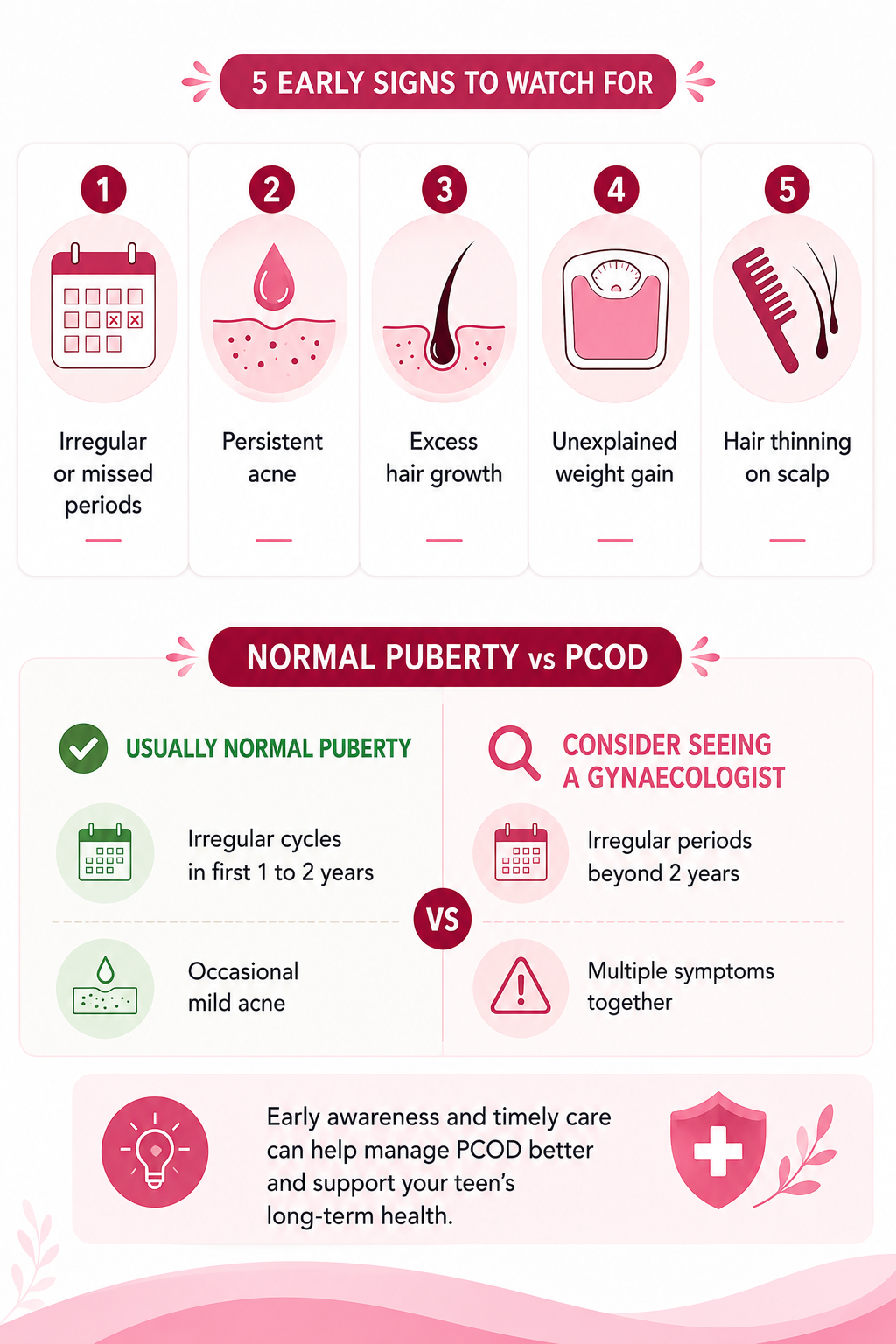
It is common for periods to be somewhat irregular in the first one to two years after a girl starts menstruating, as the body’s hormonal rhythm is still settling. However, if your daughter has fewer than eight periods a year, cycles longer than 35 days, experiences unusually heavy periods, or has gone several months without a period well beyond the first two years, this can be an early sign of PCOD rather than normal irregularity.
Acne and PCOD in Teens
Some acne during teenage years is expected due to normal hormonal changes. However, persistent, severe acne that does not respond to typical skincare or over the counter treatments, particularly along the jawline, chin, and lower cheeks, can be linked to the elevated androgen levels seen in PCOD.
Excess Hair Growth (Hirsutism) in Teenagers
Noticeable hair growth on the face, chin, upper lip, chest, or back is not a typical part of puberty for most girls and can indicate elevated androgen levels associated with PCOD. This symptom is often distressing for teenagers and is one of the more visible early signs parents may notice.
Unexplained Weight Gain in Teenage Girls
While weight changes are a normal part of growing up, rapid or unexplained weight gain, especially around the abdomen, combined with difficulty losing weight despite reasonable diet and activity levels, can point toward the insulin resistance commonly associated with PCOD.
Hair Thinning or Scalp Hair Loss
Some teenage girls with PCOD notice thinning hair or a receding hairline, occurring alongside excess body or facial hair. This combination, hair loss on the scalp paired with excess hair elsewhere, is a distinctive pattern worth discussing with a gynaecologist.
Is It Normal Puberty or PCOD? How to Tell the Difference
This is one of the most common questions parents ask, and it is a fair one, since puberty itself brings irregular cycles, some acne, and body changes.
The key difference lies in duration, severity, and combination of symptoms. Occasional irregular periods in the first year or two after menarche, mild acne, or normal body changes are typically just puberty.
PCOD becomes more likely when irregular periods persist well beyond the first two years, when multiple symptoms appear together, such as irregular cycles plus excess hair growth plus persistent acne, or when symptoms are severe enough to affect your daughter’s confidence or daily comfort.
If you are ever unsure, it is always better to have a gynaecologist evaluate the pattern rather than assuming it will resolve on its own.
What Causes PCOD in Adolescents
Understanding the underlying causes helps explain why PCOD develops and why early management matters.
Hormonal Imbalance in Teenagers
During puberty, the body’s hormone levels are naturally in flux. In girls who develop PCOD, the ovaries produce higher than typical levels of androgens, which disrupts the normal maturation and release of eggs, leading to irregular cycles and other visible symptoms.
Insulin Resistance in Adolescents
Many teenage girls with PCOD also have some degree of insulin resistance, where the body does not respond to insulin as effectively as it should. This leads to higher circulating insulin levels, which in turn stimulate the ovaries to produce more androgens, creating a cycle that worsens symptoms over time.
Genetics and Family History
PCOD tends to run in families. If a mother, sister, or close relative has PCOS or PCOD, a teenage girl has a meaningfully higher chance of developing it herself. Family history is often one of the first things a gynaecologist will ask about during evaluation.
Lifestyle and Diet Factors
Sedentary habits, diets high in refined sugar and processed food, and irregular sleep patterns can all contribute to worsening insulin resistance and hormonal imbalance in teenagers who may already be genetically predisposed to PCOD.
How PCOD Is Diagnosed in Teens
Diagnosing PCOD in teenagers requires a slightly different approach than in adults, since some criteria used for adult PCOS diagnosis, such as ultrasound findings of multiple ovarian follicles, can overlap with completely normal adolescent ovarian development.
A gynaecologist will typically look at the full clinical picture rather than relying on a single test. This usually includes a detailed menstrual history, physical examination for signs like acne, excess hair growth, or skin changes, and blood tests to check hormone levels, including androgens, LH, FSH, and thyroid function.
An ultrasound may be recommended, but is interpreted carefully in teenagers, since normal adolescent ovaries can sometimes appear similar to polycystic ovaries on imaging alone.
Because of this complexity, a diagnosis in a teenager is usually made cautiously and confirmed by tracking symptoms over time rather than after a single visit.
The Emotional Impact: Mental Health and PCOD in Teens
The physical symptoms of PCOD, acne, excess hair growth, and weight changes, often affect a teenage girl’s self esteem and body image at an age when she is already navigating significant social and emotional changes.
It is not uncommon for teenagers with PCOD to experience anxiety, low mood, or social withdrawal related to how they feel about their appearance.
As a parent, acknowledging these feelings without dismissing them matters as much as addressing the physical symptoms.
Open conversations, reassurance, and involving a gynaecologist or counselor when needed can help your daughter feel supported rather than isolated by her diagnosis.
Teenage PCOD Treatment: What Actually Helps
PCOD treatment in teenagers focuses on managing symptoms, preventing long term complications, and supporting healthy development, rather than aggressive intervention.
Lifestyle Changes for Teenage PCOD
Regular physical activity, at least 30 to 45 minutes most days of the week, combined with consistent sleep patterns, forms the foundation of teenage PCOD management. Even modest improvements in activity levels and sleep quality can meaningfully improve insulin sensitivity and hormonal balance.
PCOD Diet for Teenagers
A balanced diet that limits refined sugar and processed food while including whole grains, lean protein, vegetables, and healthy fats can help manage insulin resistance. Involving the whole family in these dietary changes, rather than isolating the teenager, tends to work better and feels less restrictive.
When Medication Is Recommended
For some teenagers, lifestyle changes alone are not enough, and a gynaecologist may recommend medication. This can include birth control pills to regulate cycles and reduce androgen related symptoms like acne and excess hair growth, or metformin in cases involving significant insulin resistance.
Any medication decision should be made carefully, considering the teenager’s specific symptoms, age, and overall health, in consultation with a gynaecologist experienced in adolescent care.
When Should Parents Take Their Daughter to a Gynaecologist?
You do not need to wait for a formal diagnosis at home before seeking professional input. It is worth consulting a gynaecologist if your daughter has had irregular periods for more than two years since her first period, has visible signs of excess androgen such as persistent acne or unwanted hair growth, has experienced noticeable weight gain that is difficult to manage, or if her symptoms are affecting her emotional wellbeing or self confidence.
Early evaluation does not mean immediate aggressive treatment. Often, it simply means monitoring, lifestyle guidance, and reassurance, along with a plan to address symptoms if they progress.
The goal of seeing a gynaecologist early is to catch and manage PCOD before it leads to longer term complications in adulthood, such as fertility difficulties or metabolic issues.
Frequently Asked Questions on PCOD in Teenagers
Q1: Can PCOD in teenagers go away on its own?
PCOD itself does not typically go away completely, but symptoms can significantly improve or become well managed with lifestyle changes and, when needed, medical treatment. Early management often prevents symptoms from worsening over time.
Q2: At what age can a girl be diagnosed with PCOD?
While PCOD is most confidently diagnosed a few years after a girl starts menstruating, since early cycles are naturally irregular, doctors can begin monitoring symptoms and risk factors from the early teenage years if there is a strong family history or clear symptom pattern.
Q3: Does PCOD in teenagers affect future fertility?
PCOD can affect ovulation, which may impact fertility later in life if left unmanaged. However, with appropriate lifestyle changes and medical care starting in the teenage years, many women with PCOD go on to conceive successfully as adults.
Q4: Is weight loss necessary to manage PCOD in teenagers?
Weight management can help improve symptoms in teenagers who are above a healthy weight range, but it is not the only factor. Teenagers at a healthy weight can also have PCOD, and treatment in those cases focuses more on hormonal balance and insulin sensitivity than weight loss specifically.
Q5: Should my daughter avoid all sugar if she has PCOD?
Complete elimination of sugar is not usually necessary or realistic for a teenager. The focus should be on reducing refined sugar and processed food overall while maintaining a balanced, sustainable diet rather than an overly restrictive one.
Supporting Your Daughter Through PCOD
PCOD in teenagers is more common than many parents realize, and recognizing the early signs, irregular periods beyond the first couple of years, persistent acne, excess hair growth, or unexplained weight changes, allows for earlier support and better long term outcomes.
This is not about alarming every parent over normal puberty changes, but about knowing when a pattern of symptoms deserves a closer look.
If you have noticed several of these signs in your daughter, consulting a gynaecologist experienced in adolescent care can provide clarity, reassurance, and a management plan suited to her specific needs. Dr. Harpreet Kaur works closely with teenage girls and their families to address PCOD with sensitivity, clear communication, and age appropriate care.
Get PCOD in Teenage Girls Properly Evaluated
Early signs of PCOD in teenagers are easy to overlook, but early attention makes a real difference in your daughter’s long term health and confidence.
If you have concerns about your daughter’s periods, skin, hair growth, or weight changes, do not wait for symptoms to worsen. Schedule a consultation with Dr. Harpreet Kaur, a gynaecologist and obstetrician in Mohali, today for a compassionate, age appropriate evaluation and personalized guidance for your daughter’s health.
Disclaimer: This blog is intended for general informational and educational purposes only and should not be considered a substitute for professional medical advice, diagnosis, or treatment. PCOD symptoms and severity vary from person to person, and diagnosis in teenagers requires careful clinical evaluation. Always consult a qualified gynaecologist before making any decisions related to your daughter’s health, medication, or treatment.