Gestational Diabetes: Symptoms, Risks, and Management
Pregnancy brings a long list of new sensations, tiredness, thirst, needing the bathroom more often, so it can be genuinely hard to tell what is a normal part of Pregnancy Care and what might be gestational diabetes.
This is one of the most common pregnancy complications, and the tricky part is that it often causes no symptoms at all, which is exactly why routine screening matters so much.
This guide walks through the signs and symptoms of gestational diabetes, who is at risk, how it is diagnosed, and what managing it actually looks like day to day.
What Is Gestational Diabetes and Why Does It Happen?
Gestational diabetes is a type of high blood sugar that develops during pregnancy in women who did not have diabetes before becoming pregnant. It usually appears around the 24th week, which is why screening is typically done between 24 and 28 weeks.
During pregnancy, the placenta produces hormones that help the baby grow, but these same hormones can also block the normal action of insulin in the mother’s body, a condition called insulin resistance.
Ordinarily, the pancreas responds by producing more insulin to keep up. In gestational diabetes, the pancreas cannot produce enough extra insulin to overcome this resistance, and blood sugar levels rise above the normal range.
Signs and Symptoms of Gestational Diabetes
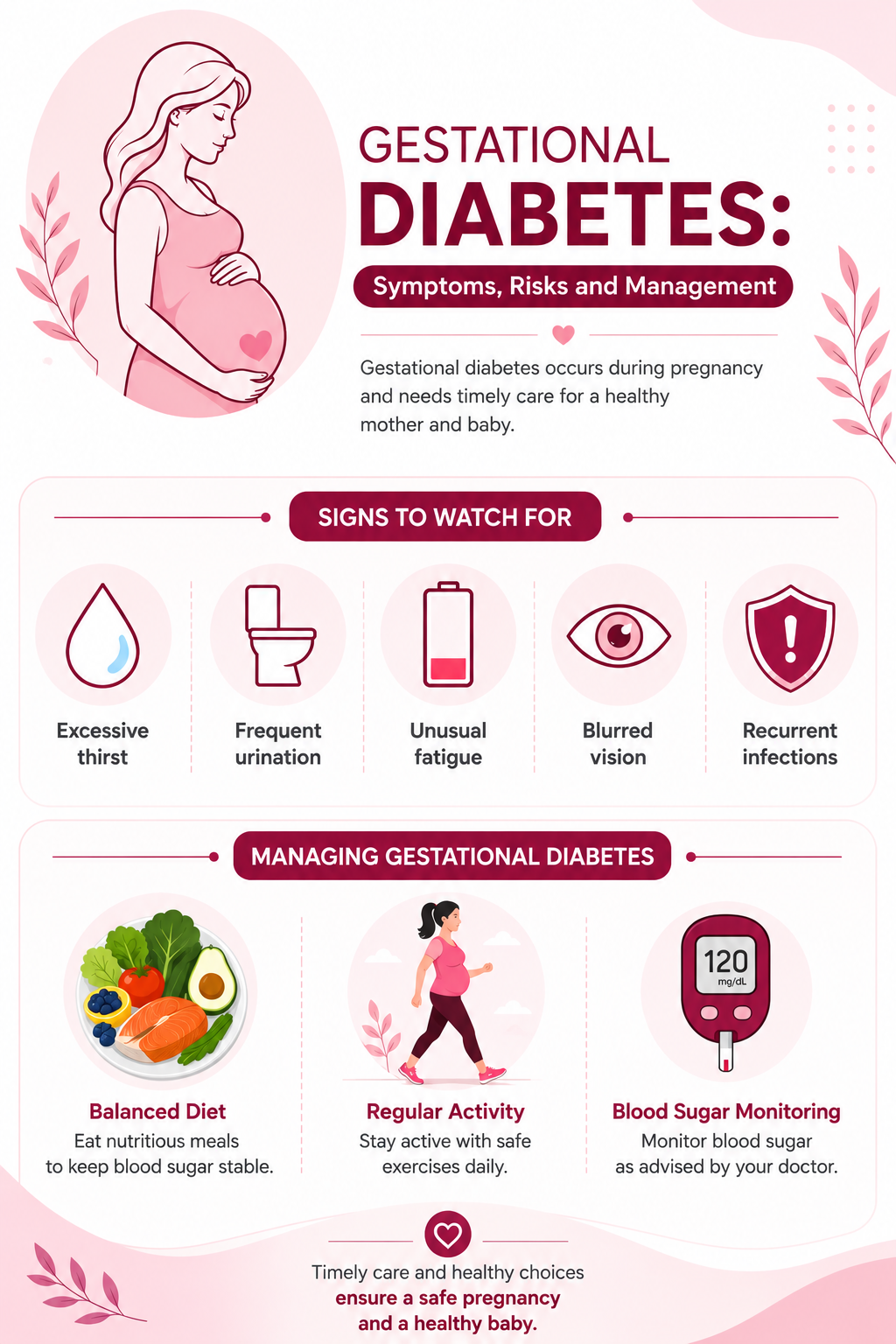
Here is the part that catches many women off guard, gestational diabetes very often causes no noticeable symptoms whatsoever. When symptoms do appear, they tend to be mild and easy to mistake for ordinary pregnancy discomfort.
Excessive Thirst During Pregnancy
Feeling thirstier than usual, even after drinking plenty of fluids, can be a sign that blood sugar levels are running higher than normal. This happens because excess sugar in the blood pulls water out of your tissues, leaving you feeling dehydrated.
Frequent Urination in Pregnancy
Needing to urinate more often is common in pregnancy simply due to the growing uterus pressing on the bladder, which makes this symptom particularly easy to overlook. However, when it is paired with excessive thirst, it is worth mentioning to your gynaecologist rather than assuming it is only due to your baby’s position.
Fatigue and Low Energy
Tiredness is expected throughout pregnancy, but unusually persistent fatigue that does not improve with rest can sometimes be linked to blood sugar fluctuations, since your cells are not getting glucose efficiently for energy.
Blurred Vision in Pregnancy
High blood sugar can temporarily affect the lens of the eye, leading to blurry vision. This symptom is less common but should not be ignored if it occurs.
Recurrent Infections
Higher blood sugar levels create an environment where yeast infections and urinary tract infections happen more easily and may keep coming back. If you are noticing repeated infections during pregnancy, it is worth raising this with your doctor.
Because these symptoms overlap so heavily with normal pregnancy experiences, it is important to understand that the absence of symptoms does not rule out gestational diabetes. This is precisely why the scheduled glucose screening test matters more than watching for symptoms alone.
Who Is at Risk? Gestational Diabetes Risk Factors
While gestational diabetes can develop in any pregnancy, certain factors increase the likelihood:
- Having had gestational diabetes in a previous pregnancy
- Previously giving birth to a baby weighing over 9 pounds (4 kg)
- Being overweight or obese before pregnancy
- A family history of type 2 diabetes
- Having polycystic ovary syndrome (PCOS)
- Being over the age of 25, with risk increasing further with age
- Certain ethnic backgrounds, including South Asian, which is relevant for many women in India
- High blood pressure or a history of heart disease
If several of these apply to you, your gynaecologist may recommend earlier screening rather than waiting until the standard 24 to 28 week window.
How Gestational Diabetes Is Diagnosed
Diagnosis is based on a glucose screening test, not on symptoms. There are two common approaches used by doctors.
The first is a two-step method, starting with a glucose challenge test where you drink a sugary solution and have your blood sugar checked an hour later, without needing to fast beforehand. If this result is higher than normal, a longer three-hour oral glucose tolerance test follows, which does require fasting.
The second is a one-step method using a single two-hour oral glucose tolerance test after fasting overnight, with blood sugar checked at set intervals after drinking the glucose solution.
Both approaches are recognised by medical guidelines, and which one your gynaecologist uses often depends on clinical preference and local protocol. If you have significant risk factors, your doctor may also test you earlier in pregnancy, in addition to the standard test later on.
Risks of Untreated Gestational Diabetes
Understanding why proper management matters helps make sense of why gynaecologists take this diagnosis seriously, even when a woman feels completely fine.
Risks to the Mother
Untreated gestational diabetes increases the risk of high blood pressure and preeclampsia during pregnancy, a higher likelihood of needing a cesarean delivery, and a significantly increased risk of developing type 2 diabetes later in life.
Risks to the Baby
Babies exposed to high maternal blood sugar levels can grow larger than average, a condition called macrosomia, which increases delivery complications.
Other risks include low blood sugar in the baby shortly after birth, a higher chance of premature birth, breathing difficulties at birth, and an increased likelihood of developing obesity or type 2 diabetes later in the child’s life.
The encouraging part is that with proper management, most women with gestational diabetes go on to have healthy pregnancies and healthy babies, which is exactly why early diagnosis and consistent monitoring matter so much.
Gestational Diabetes Management: Diet and Lifestyle
For most women, blood sugar can be well controlled through diet and lifestyle changes alone, without needing medication.
Foods to Eat
Focus on complex carbohydrates such as whole grains, dal, and vegetables, which are digested more slowly and cause smaller blood sugar spikes. Include lean protein sources like paneer, eggs, chicken, or fish at each meal, along with healthy fats from nuts, seeds, and olive oil.
For a full trimester wise meal plan, our Indian diet for pregnancy guide can help you plan balanced meals. Eating smaller, more frequent meals throughout the day, rather than three large ones, also helps keep blood sugar levels steadier.
Foods to Limit
Refined carbohydrates such as white rice, white bread, and sugary snacks cause rapid blood sugar spikes and should be limited.
Sweetened beverages, fruit juices, and desserts also need to be reduced significantly, though this does not mean cutting out fruit entirely, whole fruit in moderate portions paired with protein is generally fine.
Exercise and Blood Sugar Control
Light to moderate physical activity, such as a 20 to 30 minute walk after meals, helps your body use glucose more effectively and can meaningfully improve blood sugar control. Always check with your gynaecologist before starting or continuing an exercise routine during pregnancy.
Gestational Diabetes Treatment Options
If diet and exercise alone are not enough to keep blood sugar within target range, which happens in a meaningful number of cases, medication becomes necessary.
Insulin injections are the most commonly used treatment when medication is needed, since insulin does not cross the placenta and has a long track record of safety in pregnancy. In some cases, oral medications such as metformin may be used instead, depending on individual circumstances and your gynaecologist’s assessment.
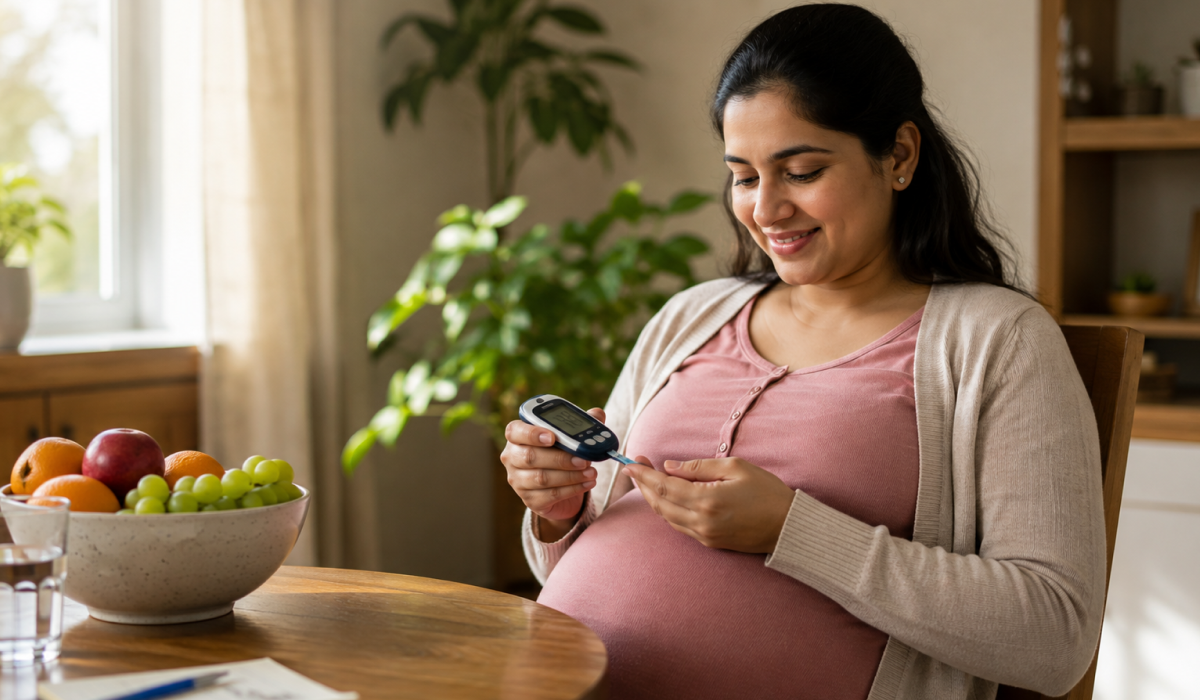
Regular blood sugar monitoring at home, usually with a glucose meter, becomes part of daily routine once gestational diabetes is diagnosed, allowing you and your doctor to see how well your management plan is working and adjust it as needed.
Gestational Diabetes and Delivery: What to Expect
Most women with well-controlled gestational diabetes are able to have a normal vaginal delivery. However, if the baby is estimated to be significantly larger than average, your gynaecologist may recommend closer monitoring as part of High-Risk Pregnancy Care and discuss the risks and benefits of a planned cesarean delivery.
During labor, blood sugar levels are often monitored more closely, and after delivery, your baby’s blood sugar will typically be checked shortly after birth, since babies can experience a temporary drop in blood sugar once they are no longer receiving glucose from the mother.
Life After Delivery: Postpartum Diabetes Risk
For most women, gestational diabetes resolves once the baby is born, since the hormonal changes driving insulin resistance are no longer present. However, having had gestational diabetes significantly raises the risk of developing type 2 diabetes later in life, according to he CDC.
Because of this, it is recommended to get tested for diabetes 4 to 12 weeks after delivery, and then continue periodic testing every one to three years going forward. Maintaining a healthy weight, staying physically active, and eating a balanced diet after pregnancy all meaningfully reduce this long-term risk.
If you plan future pregnancies, it is also worth knowing that gestational diabetes in one pregnancy increases the likelihood of it recurring in subsequent ones, so early screening in future pregnancies is often recommended.
Frequently Asked Questions
Q1: Can gestational diabetes be prevented?
It cannot always be prevented, since some risk factors like family history and ethnicity cannot be changed. However, maintaining a healthy weight before pregnancy, eating a balanced diet, and staying physically active can lower the risk in many women.
Q2: Will gestational diabetes harm my baby permanently?
In most cases, with proper management, babies born to mothers with well-controlled gestational diabetes are healthy. The main risks arise when the condition goes undiagnosed or poorly managed, which is why regular monitoring and following your gynaecologist’s guidance matters.
Q3: Do I need insulin if I have gestational diabetes?
Not necessarily. Many women manage gestational diabetes successfully through diet and exercise alone. Insulin or medication is only added if blood sugar remains above target despite lifestyle changes.
Q4: Will I definitely get gestational diabetes again in my next pregnancy?
Not definitely, but the risk is higher if you have had it before. Discussing this with your gynaecologist before or early in your next pregnancy allows for earlier screening and monitoring.
Q5: Can I still have a normal delivery with gestational diabetes?
Yes, many women with well-managed gestational diabetes have normal vaginal deliveries. The mode of delivery depends on factors like the baby’s estimated size and how well blood sugar has been controlled, which your gynaecologist will assess as your due date approaches.
Talk to a Gynaecologist in Mohali About Gestational Diabetes
Gestational diabetes can feel alarming to hear about, especially when you feel completely fine, but it is one of the most manageable pregnancy complications when caught early and monitored consistently.
Whether you are due for your glucose screening, have risk factors you are concerned about, or have already been diagnosed and want personalized guidance, speaking with an experienced gynaecologist makes the entire process feel far less overwhelming.
If you have questions about gestational diabetes screening, diet planning, or managing a current diagnosis, book a consultation with Dr. Harpreet Kaur, Gynaecologist and Obstetrician in Mohali, for compassionate, evidence-based guidance through every stage of your pregnancy.
Disclaimer: This blog is intended for general informational and educational purposes only and should not be considered a substitute for professional medical advice, diagnosis, or treatment. Gestational diabetes management varies based on individual health factors. Always consult a qualified gynaecologist for diagnosis, testing, and a treatment plan suited to your specific pregnancy.